
Start with a category ابدأ من هنا
Cleaning and laundry guides, Home Guides
How to Wash Dishes Faster and With Less Soap After a Family Meal
20
Nov
Nov
Quick answerWash in a fixed order: scrape every plate into the bin, soak the pots, then wash glasses, cutlery, plates and finally pots. A soap dispensing brush keeps soap and brush in one hand, so you press a little soap onto the bristles only when you need it instead of pouring it on a sponge. You finish faster, with less soap and less mess around the sink.
In this guide
Why the washing up takes so long
Friday lunch with the family, a dinner for guests, an iftar for twenty. The food takes hours to cook and minutes to eat, and then the sink fills to the top. Plates with rice stuck on, pots with oil, glasses with juice, a mountain of spoons.
Most of the time is lost in small things. One hand holds the sponge, the other reaches for the soap bottle again and again. Soap goes everywhere, the sink fills with foam, and you rinse twice because too much soap was used. Dirty plates go in the water with food still on them, so the water turns greasy within minutes.
A clear order and the right brush cut the job down by a lot.
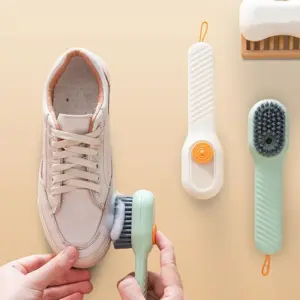
From Cairo HubsSoap Dispensing Cleaning Brush Original price was: 111 EGP.85 EGPCurrent price is: 85 EGP.Add to cartView product
Before you turn on the tap
- Scrape everything. Empty every plate into the bin first. Food in the sink makes every next dish dirtier.
- Soak the pots. Fill the pots with warm water right after serving, so the food softens while you wash the rest.
- Sort by type. Glasses together, cutlery together, plates stacked, pots aside.
- Clear the drying rack. Put away whatever is already dry, so there is space for the new load.
- Fill the brush. Fill the brush reservoir with dish soap before you start, so you do not stop halfway.
Wash in the right order step by step
- Glasses first. They are the least greasy. Wash them while the water and the brush are cleanest.
- Then cutlery. Wash spoons and forks in small bunches. Sharp knives go separately with a knife brush so your fingers stay away from the edge.
- Then plates. Press the brush lightly, the soap reaches the bristles, and you scrub each plate in a few circles.
- Serving dishes and bowls. Rice and salad bowls come next, before the heavy grease.
- Pots and pans last. By now they have soaked, so most of the food lifts easily. The brush lifts grease and dirt without scratching surfaces.
- Rinse in one go. Rinse each group under running water and stand it in the rack to dry.
- Rinse the brush. Rinse the bristles after use and stand the brush upright to dry next to the sink.
Tip: After a big family meal, ask one person to clear and scrape plates while another washes. With a fixed order, two people finish the sink in half the time.
How to use less soap
Pouring soap straight onto a sponge wastes most of it. It foams in your hand, drips into the sink and needs more rinsing. With a soap dispensing brush, soap only comes out when you press, straight onto the bristles you are scrubbing with.
- Press lightly. A little soap covers a large area
- Press again only when the bristles stop foaming
- Use warm water, which helps the soap lift grease
- Do not fill the sink with foam. Wash under a thin stream or in a small bowl of water
Less soap also means less rinsing, which saves water and time at every meal. Over a month of family lunches, the bottle of dish soap lasts noticeably longer, and the sink and counter stay free of the slippery foam that usually spreads everywhere.
When a pot needs more than soap
Daily soap washing keeps pots clean, but a base that turned black after months of frying needs more. For burnt grease and rust on aluminium and stainless steel, a grease and rust cleaner loosens the layer so you scrub much less. Use it for the big clean before Ramadan or Eid, and keep the brush for the daily wash.
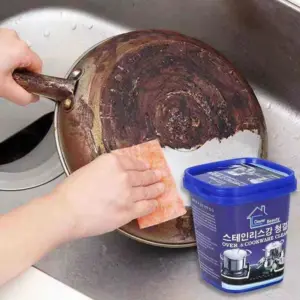
From Cairo HubsMagic Grease and Rust Cleaner for Cookware Original price was: 137 EGP.105 EGPCurrent price is: 105 EGP.Add to cartView product
One brush, more jobs
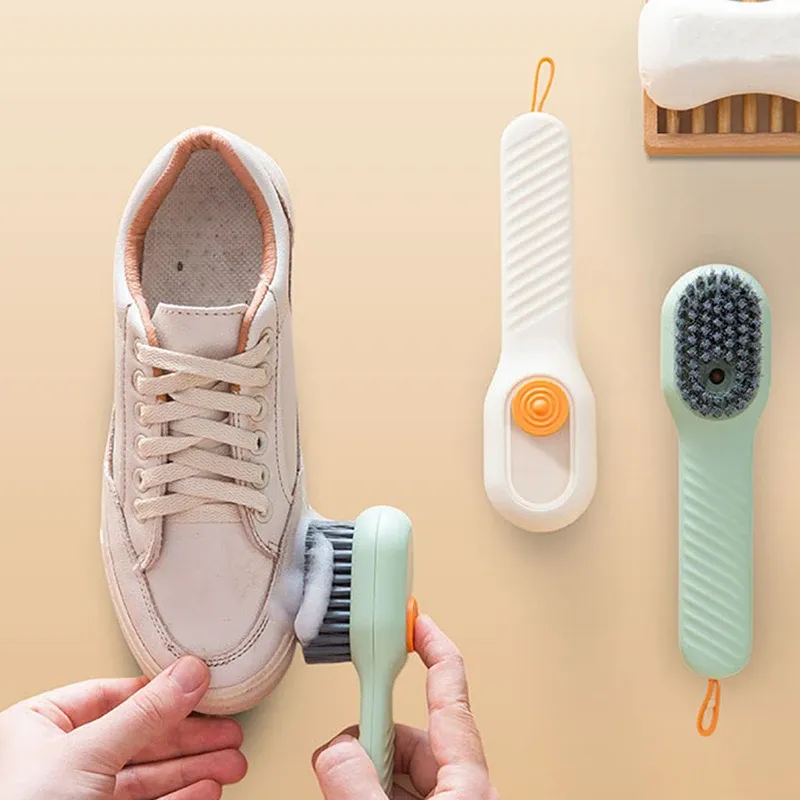
The same type of brush works beyond the kitchen sink. It is also made for shoes, clothes and fabrics, such as white sneakers at the weekend, a shirt collar before the washing machine, or a spill on the sofa. Keep one brush with dish soap for the kitchen, and a second one with a suitable cleaner for shoes and fabrics, so kitchen soap never ends up on your sneakers.
And for sharp kitchen knives, a knife and cutlery brush cleans both sides of the blade at once while your fingers stay away from the edge.
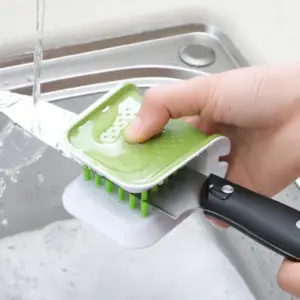
From Cairo HubsKnife and Cutlery Cleaning Brush Original price was: 111 EGP.85 EGPCurrent price is: 85 EGP.Add to cartView product
For a full plan for the kitchen, the bathroom and the laundry, read our full cleaning and laundry guide. You can also browse Cleaning and Laundry.
Questions people ask
What is the right order to wash dishes?
Glasses first, then cutlery, then plates and bowls, and pots and pans last after they have soaked.
How does a soap dispensing brush work?
You fill its reservoir with dish soap, and a light press releases soap straight onto the bristles while you scrub.
Does it scratch pots and plates?
No. It lifts grease and dirt without scratching surfaces.
Can I use it for shoes and clothes?
Yes. It works on dishes, shoes, clothes and fabrics. Keep a separate brush for shoes with a suitable cleaner.
Does Cairo Hubs deliver across Egypt?
Yes, to every governorate. Delivery is 80 EGP and free on orders over 1,000 EGP.

 Storage & Organization
 Kitchen & Dining
 Mugs & Drinkware
 Travel & Lunch Boxes
 Ramadan
 Cleaning & Laundry
 Bathroom
 Bedroom & Living
 Decor & Lighting
 Office & Study
 Kids & Toys
 Winter Slippers
 Smart Tools
 Tools & Repairs
 Car Accessories
 Health & Beauty
 Sports & Fitness