
Start with a category ابدأ من هنا
Storage and Closet Organization Guide for Egyptian Homes
Quick answerTo organize storage and closets in an Egyptian home, declutter first, then give every type of item one home: hanging clothes on a rail, folded clothes in organizers that keep piles straight, the off season in closed covered storage, and small items like jewelry, makeup and cables in their own boxes or pouches. When you have no built in wardrobe, a fabric wardrobe that assembles without tools gives you a full closet, and baskets and foldable organizers keep every shelf in order.
In this guide
- Why storage runs out in Egyptian homes
- Declutter and plan before you buy
- Closet and wardrobe organization
- Summer and winter clothes swap
- Small rooms, kids rooms and rented flats
- Jewelry, makeup and small items
- Desk, cables and study corners
- How to choose storage organizers
- Mistakes to avoid and keeping it tidy
- Questions people ask
Why storage runs out in Egyptian homes
Storage problems in Egyptian homes rarely come from owning too much. They come from the way our homes are used. Two full seasons of clothes, summer and winter, share the same wardrobe. Families keep blankets and extra bedding for guests. Kids grow out of clothes every year, and school bags, books and toys arrive with every new term. Many flats were built with small bedrooms and no built in closets, and people who rent often cannot fit a carpenter made wardrobe or take it with them when they move.
The signs are familiar:
- Clothes piled on a chair because the wardrobe is full or the shelves slide over.
- Winter clothes and blankets in bags on top of the wardrobe, collecting dust.
- Jewelry and accessories tangled in one drawer, with earrings lost every month.
- Chargers and cables in a knot beside the bed or on the desk.
- A guest room or balcony slowly turning into a storage room.
Good storage does not mean more furniture. It means every item has a fixed home, the things you use often are easy to reach, and the things you use rarely are packed away clean and covered. This guide covers each part of the home where storage breaks down, and how to fix it.
Declutter and plan before you buy
The most common mistake is buying organizers first. Organizers hold what you keep, so decide what you keep before you measure anything.
- Pick one space. One wardrobe, one shelf or one drawer. Small wins keep you going.
- Empty it completely. Take everything out so you see the real amount and clean the empty space.
- Sort into four groups. Keep and use now, keep for another season, give away, and throw away.
- Group what you keep by type. Trousers with trousers, shirts with shirts, bags with bags.
- Measure the space. Width, depth and height of each shelf or corner, before you choose any organizer.
- Give each group one home. Daily items at eye and hand height, seasonal items up high or in closed storage.
- Label closed storage. A simple label on a box or bag saves opening five of them to find one thing.
Tip: Give away clothes in good condition while the season is still running. A winter jacket helps someone more in December than in April.
Closet and wardrobe organization
A wardrobe works best in zones. The rail holds what wrinkles: shirts, dresses, jackets and abayas. Shelves hold what folds well: t shirts, trousers, home clothes and knitwear. The bottom holds heavier or less used items like bags and shoes in boxes.
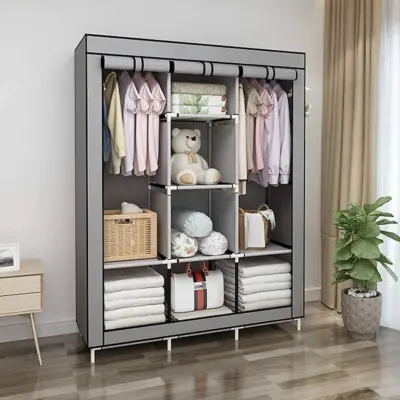
If the room has no built in closet, or you rent and do not want carpentry, a fabric wardrobe solves it. The 3 door model has a dust cover that keeps clothes clean, it assembles and comes apart easily without tools, and it fits bedrooms, dressing rooms and kids rooms. You get a hanging rail and shelves in one standing piece that moves with you.

From Cairo Hubs3 Door Fabric Wardrobe Closet, Easy Assembly Original price was: 761 EGP.585 EGPCurrent price is: 585 EGP.Add to cartView product
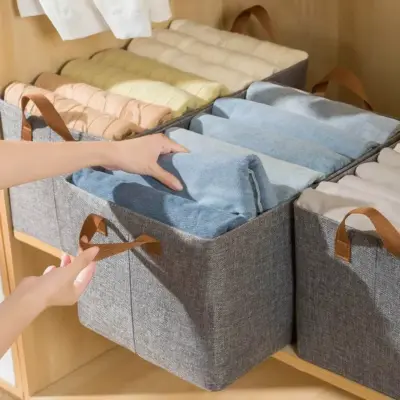
On the shelves, the problem is piles that slide and mix. A foldable metal frame clothes organizer keeps trousers, t shirts and shirts in neat sections inside the wardrobe, and the handle lets you lift the whole set out when you clean.

From Cairo HubsFoldable Metal Clothes Organizer for Wardrobe Original price was: 189 EGP.145 EGPCurrent price is: 145 EGP.View productSold out for now
- Fold clothes to the same width so piles stand straight.
- Store folded items in rows from front to back, not stacked too high, so you pull one out without toppling the rest.
- Hang trousers by type and shirts by colour. You see what you own in seconds.
- Keep a small empty space on the rail. A packed rail wrinkles everything on it.
- Give each person a fixed shelf in a shared wardrobe.
Summer and winter clothes swap
In Egypt the seasons change the whole wardrobe. Heavy winter clothes and blankets take more space than summer cotton, and the swap twice a year is the best moment to reset your storage.
- Wash before storing. Clothes stored dirty attract insects and keep stains for good.
- Dry fully. Any dampness in a closed bag leads to smell and mould.
- Use closed, covered storage. Dust gets into every corner in Egypt, especially in spring. A covered wardrobe or closed bags keep stored clothes clean.
- Store up high. The off season goes on the top shelf or top of the wardrobe, the current season at hand height.
- Keep one transition set. A light jacket and a few long sleeves stay out for the in between weeks.
Packing cubes are not only for travel. A set of six waterproof cubes keeps off season clothes, scarves or kids clothes sorted inside a wardrobe or a suitcase under the bed, and you can see each group at a glance.

From Cairo HubsWaterproof Packing Cubes, 6 Pieces Original price was: 280 EGP.215 EGPCurrent price is: 215 EGP.Add to cartView product
Small rooms, kids rooms and rented flats
In a small room the floor is precious. Use height, use the space under and beside furniture, and choose storage that stands alone.
- A fabric wardrobe stands without fixing to the wall, so it works in rented flats and moves when you rearrange.
- Baskets on open shelves hide small mess and keep the room calm to look at.
- The space under the bed fits flat bags or boxes for blankets and the off season.
- A light side table next to the bed or sofa holds a laptop, a book or snacks without a full desk.
- Hooks on the back of a door take bags, towels and the next day’s clothes.
Kids rooms need storage they can use on their own. Put everyday clothes and toys at their height, use open baskets instead of lids, and keep one basket for the toys that are out today. When putting things away is easy, kids actually do it.
Jewelry, makeup and small items
Small items cause the biggest daily frustration: one earring missing, a necklace knotted, the lipstick you wanted somewhere at the bottom of a bag. Small items need small homes.
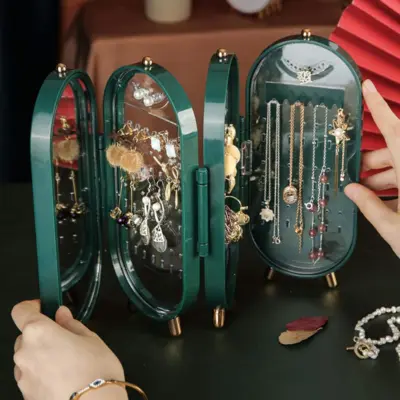
A foldable jewelry organizer keeps rings, earrings and necklaces in their own spaces, protects them from scratches, and folds to save space on the dressing table or in a drawer.

From Cairo HubsFoldable Jewelry and Accessory Organizer Original price was: 319 EGP.245 EGPCurrent price is: 245 EGP.View productSold out for now
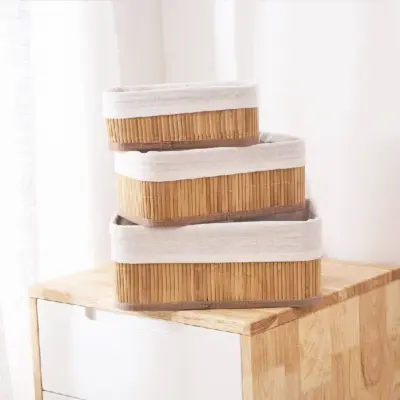
For makeup, skincare and the small things that gather on every surface, a set of linen lined wooden baskets in three sizes keeps each group together and looks calm on an open shelf or a dressing table.

From Cairo HubsSet of 3 Wooden Storage Baskets with Linen Lining Original price was: 527 EGP.405 EGPCurrent price is: 405 EGP.Add to cartView product
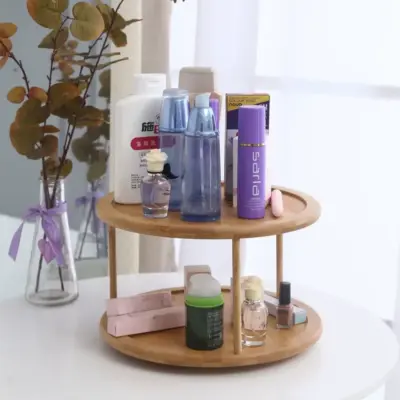
- A rotating two tier organizer on the dressing table holds makeup and creams in a small footprint, and you spin it to reach the back.
- A small portable jewelry box in your handbag stops rings and earrings from getting lost on the way.
- Detachable makeup pouches let you take only what you need for the day or a trip.
- Keep the items you use every morning in the front basket and the rest behind.
Desk, cables and study corners
Working and studying from home turned many bedroom corners into desks. The desk is where cables, papers and chargers collect fastest.
- Keep on the desk only what you use for the work in front of you.
- Give papers one tray or folder and empty it every week.
- Route cables along the back edge of the desk so they stop falling behind it.
- Keep a pouch for chargers, power banks and earphones, ready to grab when you leave.
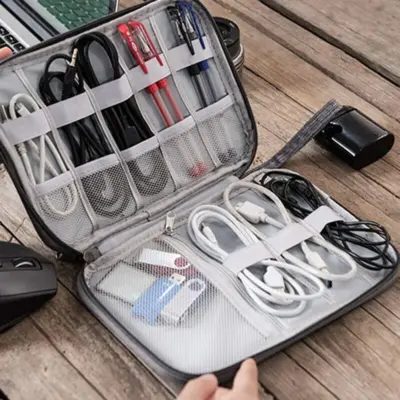
Adhesive silicone cable clips hold charging cables and earphone wires on the desk or beside the bed, so the cable end is always where your hand looks for it. For travel or a work bag, a compact water resistant cable organizer bag keeps chargers, power banks and earphones in one place with a carry handle.

From Cairo HubsSilicone Cable Organizer Clips, 10 Pieces Original price was: 124 EGP.95 EGPCurrent price is: 95 EGP.Add to cartView product
You will find more desk and study helpers in Office & Study.
How to choose storage organizers
- Measure first. Write down the width, depth and height of the space. Leave room to open doors and drawers fully.
- Match the organizer to the item. Hanging clothes need a rail, folded clothes need sections, small items need compartments.
- Closed or open? Closed and covered for the off season and anything that collects dust. Open baskets for daily items you reach for often.
- Fixed or free standing? If you rent or move often, choose pieces that stand on their own and assemble without tools.
- Foldable when not in use? Foldable organizers store flat when you do not need them.
- Built for daily use. A wardrobe, a basket or an organizer is used every day. Frames, covers and handles must take that.
Every item in our Storage & Organization range is tested by the team before it is listed, and picked because it solves a real storage problem at home. For bedroom furniture and pieces for the living room, see Bedroom & Living. Delivery reaches every governorate in Egypt.
Mistakes to avoid and keeping it tidy
- Organizing clutter. If you have not worn it in a full year, it probably does not need a place in your wardrobe.
- Overfilling the rail. Clothes need air between them or they wrinkle and smell.
- Storing clothes damp or dirty. Stains set and insects come. Wash and dry before storing.
- Mixed boxes. One box for everything becomes a box you never open. One type per box.
- Open storage for the off season. Dust settles on anything left uncovered for months.
- Ignoring small items. Jewelry, cables and makeup need their own containers, or they spread into every drawer.
Keep it tidy with short routines:
- Every evening: put clothes back on the rail or the shelf. Nothing stays on the chair overnight.
- Every week: clear the dressing table and the desk, and return small items to their boxes.
- Every season: swap summer and winter, wash covers and baskets, and give away what you did not use.
- Fabric wardrobe care: keep the cover closed, dust the frame, and keep it away from direct sun and damp walls.
More storage and closet guides
 How to Organize Spices and Bottles in a Deep CupboardThree jars of cumin and a bottle you forgot at the back? How a rotating organizer turns a…
 How to Keep Chargers and Cables Tidy in Your BackpackCharger wrapped around the earphones again? How to build one small cable kit that moves from backpack to…
 How to Organize Small Items Around the Home With Storage BasketsClips, creams, chargers and keys taking over every shelf? How to group small items into three basket sizes,…
 How to Pack a Suitcase With Packing CubesPack a suitcase that stays tidy from the first day to the last: give each packing cube one…
 How to Keep Wardrobe Shelves Neat So Folded Clothes Stop FallingPull one t shirt and the whole stack slides? How to divide wardrobe shelves, fold to one size…
 How to Organize Jewelry So Nothing Tangles or Gets LostStop tangled chains and missing earrings: how to sort your jewelry, set up a foldable organizer, and keep…
 How to Organize Charger Cables on Your Desk and NightstandStop chasing chargers behind the bed. A simple system with silicone cable clips keeps every cable on your…
 How to Organize a Small Bedroom With a Fabric WardrobeTurn a small bedroom into a tidy one with a 3 door fabric wardrobe, a clothes organizer and…
Questions people ask
How do I organize a small wardrobe with too many clothes?
Declutter first, then split the wardrobe into zones: hang what wrinkles, fold the rest into organizers that keep piles straight, and move the off season into closed storage up high. Fold to the same width and leave a little space on the rail.
Is a fabric wardrobe a good choice for a bedroom with no closet?
Yes, when you need storage without carpentry. A 3 door fabric wardrobe gives a hanging rail and shelves, its cover keeps dust off, and it assembles without tools, so it suits bedrooms, dressing rooms, kids rooms and rented flats.
How do I store winter clothes in summer?
Wash and dry them fully, fold them, and pack them in closed or covered storage such as a covered wardrobe, packing cubes or bags on a top shelf or under the bed. Label each one so you find things fast when winter comes.
How do I keep jewelry from tangling?
Give each piece its own space. A foldable jewelry organizer keeps rings, earrings and necklaces apart and protected from scratches, and a small portable box keeps them safe in your bag.
How do I organize cables and chargers at home?
Fix cable ends in place with adhesive cable clips on the desk and beside the bed, and keep spare chargers, power banks and earphones together in one cable organizer pouch.
Where can I buy storage organizers in Egypt?
Cairo Hubs sells wardrobes, clothes organizers, baskets and small item organizers, each tested by the team before listing, with delivery to every governorate in Egypt. Delivery costs 80 EGP and is free on orders over 1,000 EGP.
 Storage & Organization
 Kitchen & Dining
 Mugs & Drinkware
 Travel & Lunch Boxes
 Ramadan
 Cleaning & Laundry
 Bathroom
 Bedroom & Living
 Decor & Lighting
 Office & Study
 Kids & Toys
 Winter Slippers
 Smart Tools
 Tools & Repairs
 Car Accessories
 Health & Beauty
 Sports & Fitness