
Start with a category ابدأ من هنا
Home Guides, Smart home fixes
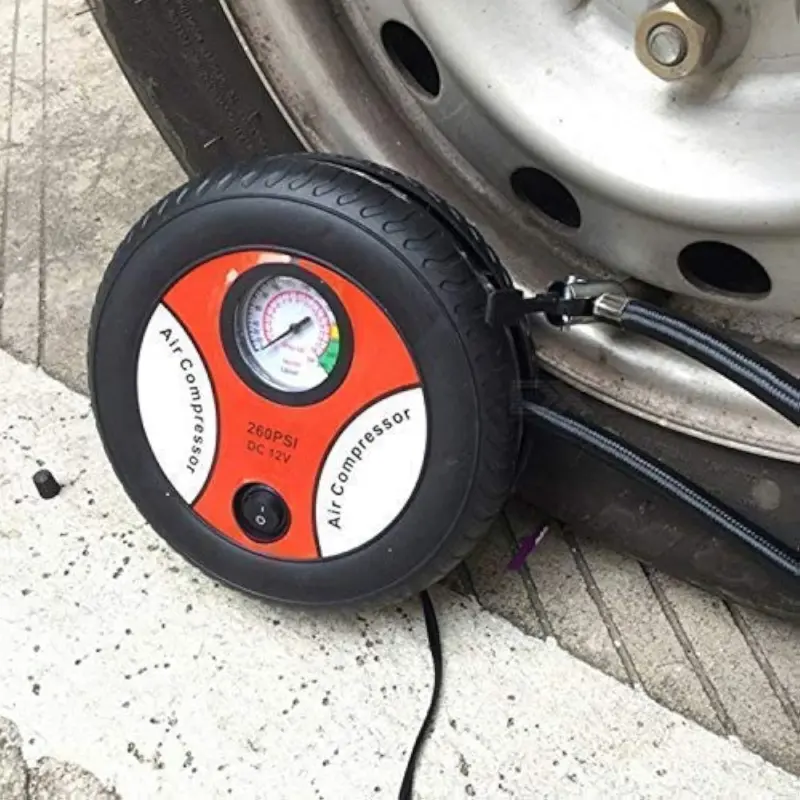
How to Inflate Your Car Tyres Yourself With a Mini Compressor
06
Nov
Nov
Quick answerPark somewhere safe, find the right pressure on the sticker inside the driver’s door, start the engine and plug a mini air compressor into the car lighter socket. Connect it to the tyre valve, inflate in short rounds and check the pressure as you go. If the tyre loses air again within a day, it needs a repair at a tyre shop.
In this guide
Why low tyres catch you at the worst time
Tyres lose air slowly, so you rarely notice until the car feels heavy on the steering or the tyre looks flat in the garage at night. In Egypt that moment often comes on the desert road, on the way to the North Coast, or in an underground garage where the nearest petrol station is a long walk away.
A low tyre is not only an inconvenience. It wears faster, uses more fuel and makes the car less stable on the highway. Keeping a small compressor in the boot means you fix it on the spot instead of waiting for help or driving slowly to the next station.

From Cairo HubsMini Portable Car Air Compressor Original price was: 332 EGP.255 EGPCurrent price is: 255 EGP.Add to cartView product
Know your tyre pressure
Every car has its own recommended pressure. You do not need to guess it:
- Look at the sticker on the inside edge of the driver’s door
- If it is not there, check the car manual or the inside of the fuel cap
- Front and rear tyres can have different numbers
- A loaded car on a long trip may need a slightly higher number, also listed on the sticker
Check the pressure when the tyres are cold, before you drive or after the car has rested for a while. Hot tyres after a long drive read higher than they really are.
Inflate a tyre step by step
- Park safely. Pull over on flat ground away from traffic, put on the hazard lights and the handbrake.
- Start the engine. Keep the engine running while the compressor works so it does not drain the battery.
- Plug it in. Connect the compressor to the car lighter socket and place it on the ground near the tyre.
- Connect to the valve. Remove the small cap from the tyre valve, keep it in your pocket, and attach the compressor hose firmly to the valve.
- Inflate in short rounds. Run the compressor, stop, and check the pressure with a tyre gauge. Repeat until you reach the number on the door sticker.
- Close up. Disconnect the hose, screw the valve cap back on and unplug the compressor before you drive.
- Check the other tyres. While the compressor is out, check all four. Low tyres rarely come alone.
Tip: Make the check a habit every Friday morning before the first drive of the day. Five minutes once a week saves you from a flat tyre on the road.
When it is more than low air
A compressor brings the pressure back, but it does not fix a hole. Watch the tyre after you inflate it. If it goes soft again within a day, or you hear a hiss, look for a nail or a cut and take the car to the nearest tyre shop. Inflating gets you there safely instead of driving on a flat tyre and damaging the rim.
More jobs for the same compressor
The same compressor that lives in your boot is useful far beyond the car:
- Bikes. Kids’ bikes go flat after a summer in the garage. Pump them up before a ride at the club.
- Balls. Football and volleyball for the beach or the garden, ready in a minute.
- Air mattresses. For camping, a night at the chalet or guests sleeping over at home.
- Before a trip. Set the pressure for a loaded car before you head to the coast or Upper Egypt.
A small emergency kit for the boot
A compressor is the core of a simple car kit. Add a few items that solve the problems Egyptian roads throw at you: a torch for night stops, a cloth and gloves for the dirty hands after touching a tyre, a bottle of water, and something for clear glass. In winter mornings the windscreen fogs from inside and the road disappears in mist outside. Anti fog wipes for the glass keep your view clear and make rain slide off the windscreen.

From Cairo HubsAnti Fog and Rain Repellent Car Glass Wipes Original price was: 124 EGP.95 EGPCurrent price is: 95 EGP.Add to cartView product
For more ideas that make everyday life at home and on the go easier, read our full smart home fixes guide. You can also see everything for your car in Car Accessories.
Questions people ask
How does a mini car air compressor work?
It plugs into the car lighter socket and pumps air into the tyre through the valve. Keep the engine running while you use it.
Can I inflate bikes and balls with a car compressor?
Yes. The mini compressor also inflates bikes, balls and air mattresses.
What tyre pressure should my car have?
Use the number on the sticker inside the driver’s door or in the car manual, and check it when the tyres are cold.
Will a compressor fix a punctured tyre?
No. It refills the air so you can drive safely to a tyre shop, where the hole can be repaired.
Does Cairo Hubs deliver across Egypt?
Yes, to every governorate. Delivery is 80 EGP and free on orders over 1,000 EGP.

 Storage & Organization
 Kitchen & Dining
 Mugs & Drinkware
 Travel & Lunch Boxes
 Ramadan
 Cleaning & Laundry
 Bathroom
 Bedroom & Living
 Decor & Lighting
 Office & Study
 Kids & Toys
 Winter Slippers
 Smart Tools
 Tools & Repairs
 Car Accessories
 Health & Beauty
 Sports & Fitness