
Start with a category ابدأ من هنا
Bedroom and living guides, Home Guides
How to Set a Ramadan Table for Dates, Nuts and Guests
07
Nov
Nov
Quick answerA calm Ramadan table starts with one clear spot for dates and nuts, so guests reach them the moment the call to prayer starts. Put a two bowl serving dish in the middle, dates in one bowl and nuts or sweets in the other, keep drinks on one side and a serving board for cheese, bread or desserts on the other. Fill the bowls before iftar and refill them once during the evening.
In this guide
Why the iftar table needs a plan
In most Egyptian homes the iftar table fills up in the last ten minutes before Maghrib. Plates of dates, a bag of nuts, glasses of juice and the main dishes all arrive at once, and the table turns crowded before anyone sits down. Dates end up in a plastic box, nuts stay in their bag, and someone always has to stand up to pass them around.
A little planning changes the feel of the whole evening. When the first things people eat, dates and a glass of water or juice, sit in one fixed spot, everyone breaks the fast calmly and the main dishes get their own space. It also looks generous and tidy when family or friends come over, which happens almost every night of the month.
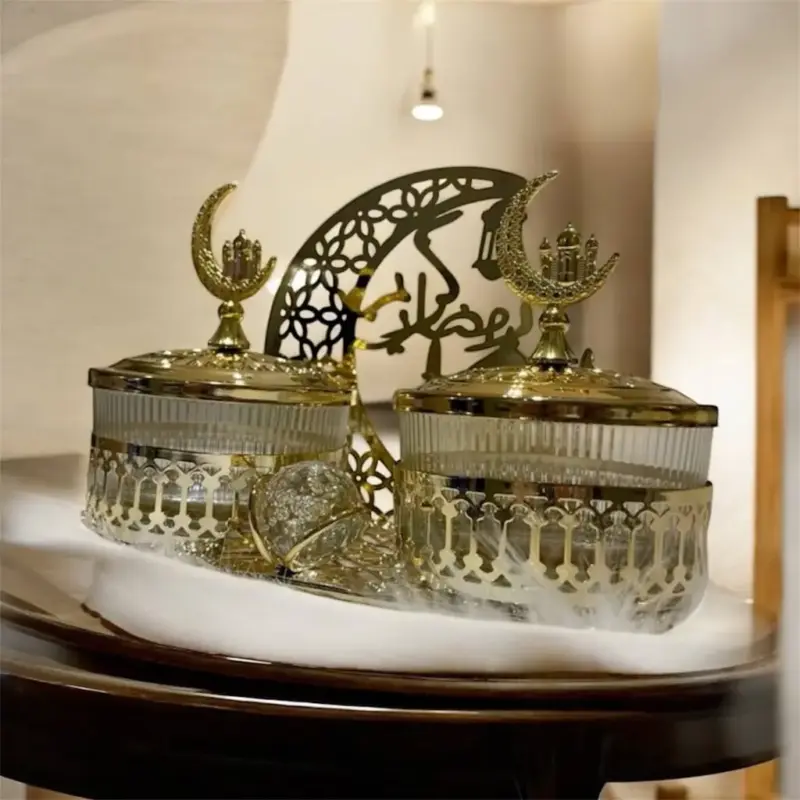
The easiest way to do that is a dedicated serving dish for dates and nuts. A dish with a stainless base and two glass bowls keeps both in clear view in the centre of the table, so nobody has to ask where the dates are.

From Cairo HubsRamadan Candy Dish, Stainless Base with 2 Glass Bowls Original price was: 852 EGP.655 EGPCurrent price is: 655 EGP.Add to cartView product
A simple layout for any table size
Whether you eat at a large dining table or a small one in the living room, the same three zones keep things in order:
- The centre: the two bowl dish with dates on one side and nuts, dried fruit or sweets on the other
- One side: drinks, glasses and a jug of water, so pouring never crosses over the food
- The other side: a serving board for cheese, bread, pickles or desserts after the meal
- The main dishes: placed between the zones, closest to the people who serve
On a small table, drop the board and keep only the dish and the drinks. The dish takes little space because the two bowls sit on one base instead of two separate plates.
Set it up step by step
- Clear the table first. Take away anything that does not belong to the meal: the remote, the phone chargers, papers. A clear table makes the rest look intentional.
- Place the dish in the middle. Put it where every seat can reach it, then set the rest of the table around it.
- Fill one bowl with dates. Use the dates your family likes most. Fill the bowl generously but not to the very top, so they do not fall when people reach in.
- Fill the second bowl. Nuts, dried apricots, raisins or a few pieces of chocolate. Change it during the month so the table does not feel the same every day.
- Arrange the drinks. Glasses on one side with water and the juice of the day, so breaking the fast takes one move.
- Bring out the serving board last. After the main meal, the board carries desserts, cheese or fruit for the evening.
Tip: Keep a closed container of extra dates and nuts in the kitchen. When the bowls run low, refill them there instead of bringing the bag to the table.

From Cairo HubsWooden Cutting Board with Legs and Serving Tray Original price was: 332 EGP.255 EGPCurrent price is: 255 EGP.Add to cartView product
From iftar to suhoor and guests
The same dish works all evening. After iftar, move it to the coffee table in the living room for guests who stop by after Taraweeh, with tea or coffee next to it. At suhoor, put it back on the table with a few dates, so the last meal before the fast includes them without extra effort.
Matching glasses make the table look complete with very little work. A set of amber crystal glasses suits hot and cold drinks, so the same glasses serve juice at iftar and tea later in the evening.

From Cairo HubsAmber Crystal Glass Cups, Set of 6 Original price was: 410 EGP.315 EGPCurrent price is: 315 EGP.Add to cartView product
For more ideas on arranging the living room and the spaces where the family gathers, read our full bedroom and living guide, or browse the full Ramadan collection.
A gift for the first days of Ramadan
Visiting family in the first week of Ramadan usually means bringing something with you. A serving dish for dates and nuts is a gift people actually use every night of the month and bring out again every year. Fill both bowls with dates and nuts before you visit and it becomes a complete gift on its own, without extra wrapping.
It also suits newly married couples setting up their first Ramadan at home, and anyone who hosts the family iftar and wants the table to look ready.
Questions people ask
What is the dish made of?
It has a stainless base with two clear glass bowls.
What can I serve in it?
Dates in one bowl and nuts or sweets in the other. It also works for dried fruit and small chocolates.
Is it a good Ramadan gift?
Yes. It is used every night during the month and comes out again every Ramadan. Fill the bowls with dates and nuts before you give it.
Where should I put it on the table?
In the centre, where every seat can reach it, with drinks on one side and the main dishes around it.
Does Cairo Hubs deliver across Egypt?
Yes, to every governorate. Delivery is 80 EGP and free on orders over 1,000 EGP.

 Storage & Organization
 Kitchen & Dining
 Mugs & Drinkware
 Travel & Lunch Boxes
 Ramadan
 Cleaning & Laundry
 Bathroom
 Bedroom & Living
 Decor & Lighting
 Office & Study
 Kids & Toys
 Winter Slippers
 Smart Tools
 Tools & Repairs
 Car Accessories
 Health & Beauty
 Sports & Fitness