
Start with a category ابدأ من هنا
Cleaning and laundry guides, Home Guides
How to Clean Burnt Grease Off the Bottom of Pots and Pans
14
Nov
Nov
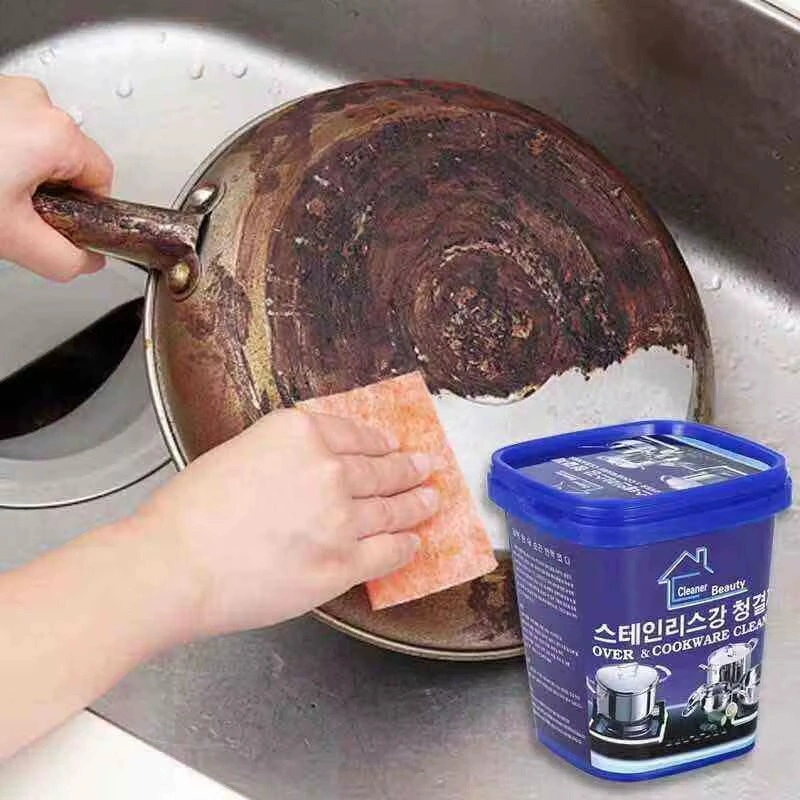
Quick answerBurnt grease on aluminium and stainless steel pots comes off faster with a grease and rust cleaner than with hours of steel wool. Wear gloves, test on a small hidden spot, apply it as the pack directs, let it loosen the layer, then scrub lightly and rinse with plenty of water. Dry the pot fully before it goes back in the cupboard so rust does not return.
In this guide
Why the pot base turns black
Egyptian cooking is generous with ghee and oil. Fried potatoes, aubergine, chicken pané, a slow cooked stew that sits on the flame for an hour. Every time, a thin film of oil splashes on the outside of the pot and the base, and the heat bakes it on. One layer is easy to wash. Twenty layers turn into a black crust that steel wool only scratches.
The same thing happens to the frying pan you use every morning and to the oven tray after every roast. Before Ramadan and Eid, most homes face a full cupboard of pots that look older than they are. The good news is that the metal underneath is usually fine. You only need to loosen what sits on top.
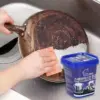
From Cairo HubsMagic Grease and Rust Cleaner for Cookware Original price was: 137 EGP.105 EGPCurrent price is: 105 EGP.Add to cartView product
Check what your pot is made of
Before you start, sort the pots by material. The grease and rust cleaner is made for aluminium and stainless steel, which covers most everyday pots, pans and trays in Egyptian kitchens.
- Aluminium: the classic light pots and large stew pots
- Stainless steel: shiny pots, cutlery, strainers and many cooking tools
- Other coatings and finishes: check the pack directions before you use any cleaner on them
Always test on a small hidden spot first, such as the inside rim of the handle, before you treat the whole pot.
Clean a burnt pot step by step
- Let the pot cool. Never clean a hot pot. Wait until it is cool to the touch.
- Wear gloves. Protect your hands, and open the kitchen window for fresh air.
- Rinse off loose food. Wash away any food left inside so the cleaner reaches the grease.
- Apply the cleaner. Follow the directions on the pack, and cover the black areas on the base and the sides.
- Give it time. Let the cleaner work on the layer instead of scrubbing at once. It loosens burnt on grease and rust so you need far less effort.
- Scrub lightly. Use a brush or a sponge. The layer should come away without hard pressure.
- Rinse well. Use plenty of water to wash off every trace of the cleaner, inside and out.
- Dry fully. Wipe the pot dry before you store it. Moisture left in a closed cupboard brings rust back.
Tip: Do the big clean in one session for all the pots, the frying pans and the oven trays together. You set up gloves, cleaner and brush once, and the whole cupboard comes back shining in one afternoon.
What to avoid. Do not attack the crust with a knife or a screwdriver, which leaves deep scratches where grease collects even faster next time. Do not mix different cleaning products in the same pot. And do not leave a cleaned pot to drip dry upside down in a closed cupboard. Rinse, dry by hand, then store.
Rust spots on stainless tools
Stainless steel is strong, but small brown spots still appear on cutlery, strainers, graters and the edges of trays, especially when they are left wet in a drying rack. The cleaner removes rust as well as grease, so treat these tools in the same session. Apply, wait, rub gently, rinse and dry straight away.
To stop rust coming back, never leave stainless tools soaking overnight, and do not store them while still damp.
A weekly habit that saves the big scrub
The black crust forms because small splashes are left to bake again and again. A short routine keeps it from building up:
- Wipe the outside of the pot after frying, while it is warm and not hot
- Wash the frying pan the same day instead of leaving it on the cooker
- Give the oven tray a soak right after you serve the food
- Once a week, check the pot bases and treat any dark spot while it is still thin
A brush that holds its own soap makes this daily washing faster. You press, the soap reaches the bristles, and one hand does the whole job. It lifts grease and dirt without scratching surfaces, so it suits pots and pans after lunch.

From Cairo HubsSoap Dispensing Cleaning Brush Original price was: 111 EGP.85 EGPCurrent price is: 85 EGP.Add to cartView product
For a full plan for keeping the kitchen, the bathroom and the laundry under control, read our full cleaning and laundry guide. You can also browse Cleaning and Laundry.
Questions people ask
How do I remove burnt grease from the bottom of a pot?
Apply a grease and rust cleaner as the pack directs, let it loosen the layer, scrub lightly and rinse with plenty of water.
Is the cleaner safe for aluminium pots?
It is made for aluminium and stainless steel. Test it on a small hidden spot first.
Does it remove rust too?
Yes. It removes rust as well as burnt on grease and brings back the shine of the metal.
How do I stop rust coming back?
Rinse well, dry the tool fully and never store stainless tools while they are still damp.
Does Cairo Hubs deliver across Egypt?
Yes, to every governorate. Delivery is 80 EGP and free on orders over 1,000 EGP.

 Storage & Organization
 Kitchen & Dining
 Mugs & Drinkware
 Travel & Lunch Boxes
 Ramadan
 Cleaning & Laundry
 Bathroom
 Bedroom & Living
 Decor & Lighting
 Office & Study
 Kids & Toys
 Winter Slippers
 Smart Tools
 Tools & Repairs
 Car Accessories
 Health & Beauty
 Sports & Fitness