
Start with a category ابدأ من هنا
Home Guides, Smart home fixes
How to Fix a Hole in a Window Screen Without Replacing It
18
Nov
Nov
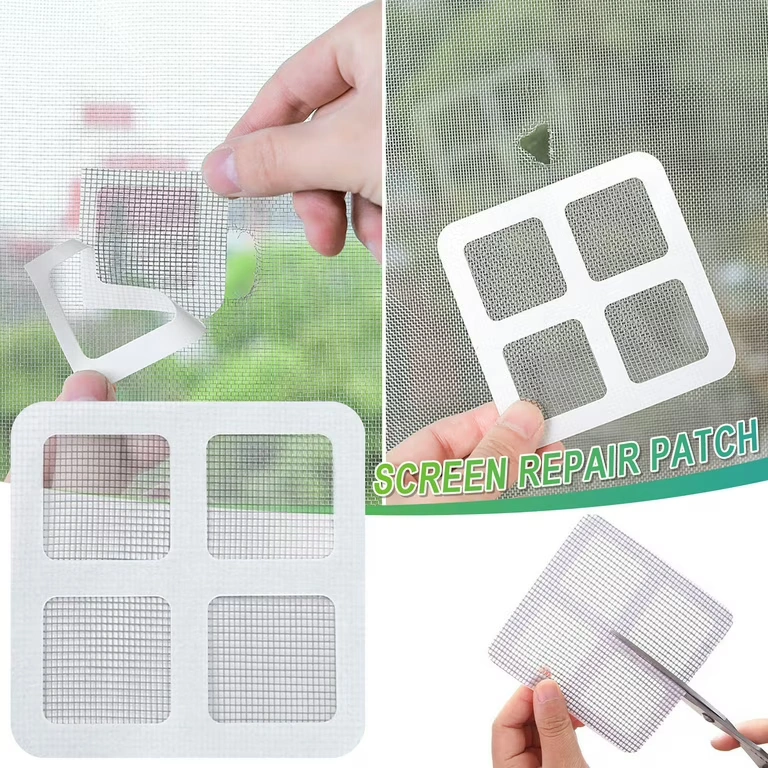
Quick answerA small hole in a window screen does not mean a new screen. Brush the dust off the mesh around the hole, pick a ready screen repair patch a little larger than the tear, and press it over the hole, from both sides if you can reach. It takes about a minute, needs no tools, and closes the gap that lets mosquitoes in at night.
In this guide
Why one small hole matters
You close the window, turn off the light, and five minutes later the buzzing starts. You check the screen and find it: a tear no bigger than a coin, low in the corner where the curtain rubs or where a toy hit it. For a mosquito, that hole is an open door.
Most families either live with it or wait until they can call a technician to replace the whole mesh, which means a visit, a bill and a window without a screen until he comes. Yet the rest of the screen is usually fine. Only the hole needs fixing.
Ready repair patches are made for exactly this. You stick one over the hole and the mesh is closed again, without removing the screen and without any tools.
From Cairo HubsWindow Screen Repair Patches, 10 Pieces Original price was: 124 EGP.95 EGPCurrent price is: 95 EGP.Add to cartView product
Patch or replace? Patch when the mesh is whole except for a few holes or short tears. Replace the screen only when the mesh crumbles to the touch, has pulled away from most of the frame, or has more patches than open mesh. In most Cairo flats, a few patches add years to a screen that still looks fine from across the room.
Find every hole first
Holes rarely come alone. Before you patch, walk through the house in daylight and check every screen properly:
- Stand inside and look towards the light. Holes show up as bright spots
- Check the bottom corners, where curtains, pets and children touch the mesh
- Look at the edges of the frame, where the mesh pulls loose over time
- Check the balcony door screen closely. It opens and closes all day, so it tears first
Count the holes and their size. A set of 10 patches is usually enough for more than one window in the house.
Patch a screen step by step
- Clean around the hole. Brush the dust off the mesh with a dry brush. Patches hold best on clean mesh.
- Pick the right size. Choose a patch a little larger than the tear so it covers all the edges and grips healthy mesh around it.
- Flatten the mesh. Push any loose wires back into place with your finger so the patch sits flat.
- Stick it on. Peel the patch and press it over the hole, starting from the centre and moving out to the edges.
- Press from both sides. If you can reach the screen from inside and outside, press the patch from both sides so it holds firmly.
- Check it in the light. Look again towards the window. No bright gap means the hole is closed.
Tip: Patch the screens in autumn or early spring, before the mosquito season starts. In the middle of summer you will be fixing holes at midnight with the light on.
Where screens tear most
Bedroom windows. These matter most because this is where mosquitoes bother you at night. Check them first.
Balcony doors. Opened and closed all day, pushed by kids, scratched by the cat. Small tears here grow fast, so patch them early.
Kitchen windows. Open for air during cooking for hours. A hole here lets in flies as well as mosquitoes.
The chalet or summer house. Humidity, wind and months of closed windows weaken the mesh. Bring a set of patches in your bag when you open the place for the season.
Keep the screen clean so it lasts
Dust and grease make the mesh heavy and brittle over time, and a dirty screen also blocks the breeze you opened the window for. A brush made for screens, glass and lint lets you clean the mesh in place before you patch it and every few weeks after.
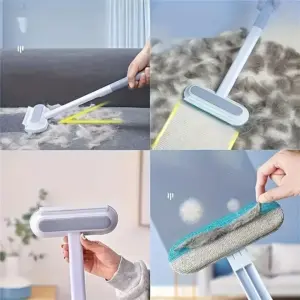
From Cairo Hubs4 in 1 Cleaning Brush for Screens, Glass and Lint Original price was: 163 EGP.125 EGPCurrent price is: 125 EGP.Add to cartView product
When the tear is long
Patches are ideal for holes and small tears. If the mesh has a long split, such as a cut along the bottom of a balcony door, a screen repair tape works better. You cut it to the exact length of the tear, stick it on, and its strong adhesive handles sun and rain. For a big tear, stick one piece inside and one outside on the same spot.
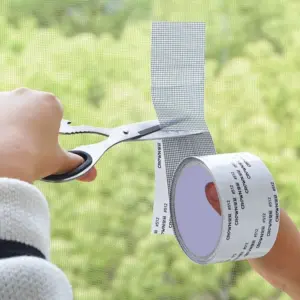
From Cairo HubsWindow Screen Repair Tape Original price was: 124 EGP.95 EGPCurrent price is: 95 EGP.Add to cartView product
For more simple fixes you can do yourself at home, read our full smart home fixes guide. You can also browse Tools and Repairs.
Questions people ask
How do I fix a hole in a window screen without replacing it?
Clean the mesh around the hole, then stick a screen repair patch a little larger than the tear over it, pressing from both sides if you can.
Do I need tools to use screen repair patches?
No. The patches are ready to stick and need no tools.
Do the patches work on balcony doors?
Yes. They work on window screens, balcony screens and mesh doors.
How many windows does one set cover?
The set has 10 patches, usually enough for more than one window in the house.
Does Cairo Hubs deliver across Egypt?
Yes, to every governorate. Delivery is 80 EGP and free on orders over 1,000 EGP.

 Storage & Organization
 Kitchen & Dining
 Mugs & Drinkware
 Travel & Lunch Boxes
 Ramadan
 Cleaning & Laundry
 Bathroom
 Bedroom & Living
 Decor & Lighting
 Office & Study
 Kids & Toys
 Winter Slippers
 Smart Tools
 Tools & Repairs
 Car Accessories
 Health & Beauty
 Sports & Fitness