
Start with a category ابدأ من هنا
Home Guides, Kitchen guides
How to Fix a Broken Pot Lid Handle at Home
20
Nov
Nov
Quick answerA broken lid handle does not mean a new pot. Unscrew what is left of the old knob from inside the lid, clean the area, then fit a replacement knob through the same hole and tighten it by hand and a screwdriver. A set with one wooden and one stainless steel knob fits most pot and pan lids, takes a few minutes and saves the cost of a new lid.
In this guide
Why lid handles break first
In a busy Egyptian kitchen, lids work hard. They go on and off a dozen times while the rice cooks, the molokhia simmers and the stew bubbles away. They get knocked into the sink, stacked in the cupboard and dropped on the counter. The knob on top takes most of that stress.
Over time the screw loosens, the plastic cracks from heat or the knob simply snaps off in your hand. What is left is a perfectly good lid that is now hard and unsafe to lift. Many people end up using a fork or a folded towel to lift it, or they put the pot away and buy a new one.
Neither is necessary. The lid is fine. Only the handle needs replacing.
Wood or stainless steel: which knob where
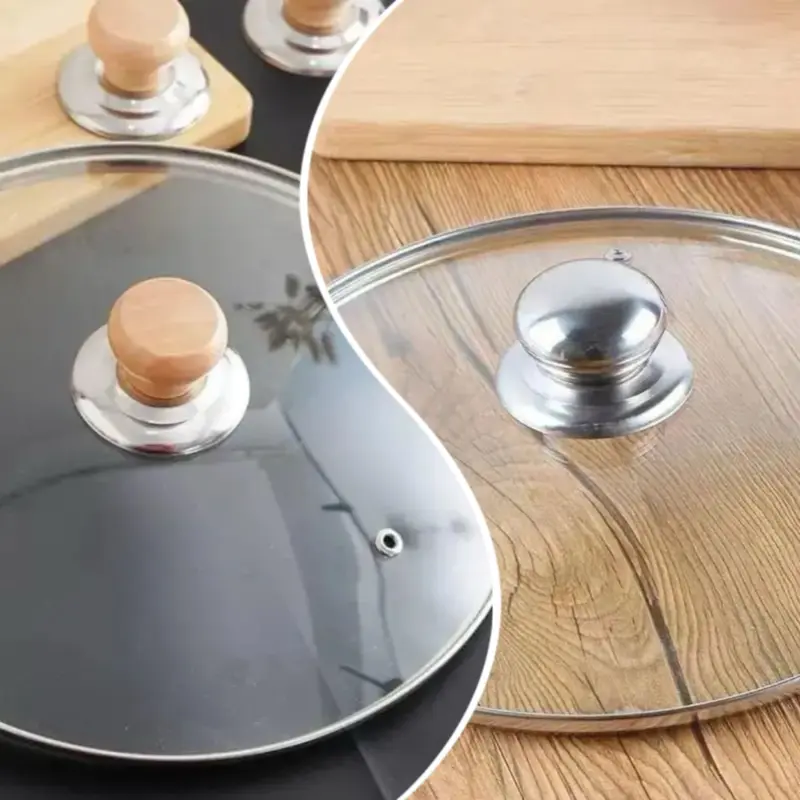
A set with one wooden knob and one stainless steel knob lets you fix two lids, or choose the finish that suits each pot.
- Wooden knob: a warm look that suits everyday pots and pans, and wood does not heat up as quickly as metal
- Stainless steel knob: a clean, modern finish that matches steel cookware
- Fits most lids: both fit the standard hole found on most pot and pan lids
- Easy to fit: no special tools beyond a screwdriver

From Cairo HubsPot and Pan Lid Replacement Knobs, Set of 2 Original price was: 137 EGP.105 EGPCurrent price is: 105 EGP.Add to cartView product
Fit a new knob step by step
- Let the lid cool. Never work on a lid that has just come off the stove.
- Remove the old knob. Turn the lid over and unscrew the screw from the inside. If the old knob broke off, remove any pieces left around the hole.
- Clean the area. Wash the lid and dry it well, especially around the hole. Grease under an old knob is common.
- Place the new knob. Set the new knob on top of the lid, lined up with the hole.
- Fit the screw from inside. Push the screw up through the hole from the underside and into the knob.
- Tighten firmly, not too hard. Tighten until the knob does not turn. On glass lids, stop as soon as it is firm so you do not stress the glass.
- Check it. Lift the lid by the new knob a few times before you put it back on a hot pot.
Tip: Check every lid in the kitchen while you have the screwdriver out. Tightening a loose knob today saves you a broken one next month.
Use lids safely while you cook
A lid handle gets hot when the pot has been on the stove for a long time, whatever it is made of. A few habits protect your hands:
- Use oven mitts when you lift a lid from a pot that has been cooking for a while
- Tilt the lid away from you as you lift, so the steam goes the other way
- Put the lid down on a heat safe surface, not straight on a plastic board
- Keep children away from the stove when lids are on and off
Silicone oven mitts that resist heat are worth keeping on a hook next to the stove, so they are always within reach when the steam starts.

From Cairo HubsHeat Resistant Silicone Oven Mitts Original price was: 228 EGP.175 EGPCurrent price is: 175 EGP.Add to cartView product
Make your cookware last longer
Replacing a knob is one way to keep good cookware in use. A few more habits help pots, pans and lids last for years:
- Soak burnt pans in warm water before scrubbing, instead of scraping hard
- Remove grease and rust spots early, before they build up
- Dry lids and pans fully before stacking them
- Store lids upright or separately, so they do not rub against each other
- Check knob screws every few months and tighten them
For grease that will not move and rust spots on cookware, a cleaner made for pots and pans saves a lot of scrubbing.

From Cairo HubsMagic Grease and Rust Cleaner for Cookware Original price was: 137 EGP.105 EGPCurrent price is: 105 EGP.Add to cartView product
For more ideas to keep your kitchen working smoothly, read our full kitchen organization guide, or browse the full Kitchen and Dining collection.
Questions people ask
Can I replace a broken pot lid handle myself?
Yes. Remove the old knob from inside the lid, clean the area and fit the new knob through the same hole with a screwdriver. It takes a few minutes.
Will the knobs fit my lids?
The set fits most pot and pan lids. Check that your lid has a hole in the middle where the old knob was fixed.
Which is better, the wooden or the steel knob?
Both work. Wood gives a warm look and does not heat up as quickly as metal, and stainless steel matches steel cookware. The set includes one of each.
Is it worth fixing a lid instead of buying a new one?
Yes. The lid itself is usually fine when only the handle breaks, so a new knob brings it back into use and saves buying a new lid.
Does Cairo Hubs deliver across Egypt?
Yes, to every governorate. Delivery is 80 EGP and free on orders over 1,000 EGP.

 Storage & Organization
 Kitchen & Dining
 Mugs & Drinkware
 Travel & Lunch Boxes
 Ramadan
 Cleaning & Laundry
 Bathroom
 Bedroom & Living
 Decor & Lighting
 Office & Study
 Kids & Toys
 Winter Slippers
 Smart Tools
 Tools & Repairs
 Car Accessories
 Health & Beauty
 Sports & Fitness