
Start with a category ابدأ من هنا
Kitchen Organization Guide for Egyptian Homes
Quick answerTo organize a kitchen in an Egyptian home, sort everything first, then give every group one fixed zone: dry food like rice and lentils in clear closed containers, daily tools beside the stove, fridge items in holders that stop waste, and a counter kept almost empty. In a small kitchen, use height and corners with tiered and rotating organizers, and spend ten minutes a week putting things back so the system holds.
In this guide
- Why Egyptian kitchens get cluttered
- Plan your kitchen in zones
- Pantry storage for rice, lentils and pasta
- Fridge organization that cuts waste
- Counter, stove and daily tools
- Small kitchens and rented flats
- Lunch boxes, bottles and drinkware
- How to choose kitchen organizers
- Mistakes to avoid and daily care
- Questions people ask
Why Egyptian kitchens get cluttered
Most kitchens in Cairo and Giza flats work hard all day. Rice, lentils, pasta, beans and flour are bought in larger amounts because they keep well and they are the base of daily cooking. Tea, coffee and spices need to sit within reach of the stove. Bread, eggs and fresh herbs come in every few days. Add the big pots for family meals, the oven trays, and the glasses that come out every time guests arrive, and a normal kitchen fills up within weeks.
The problems look the same in almost every home:
- Dry food kept in the plastic bags it came in, so bags tear, spill and attract insects.
- Cupboards packed so deep that items at the back are forgotten and bought twice.
- A counter covered with jars, spoons and small appliances, leaving no space to chop an onion.
- A fridge where herbs wilt and eggs crack because nothing has a fixed place.
- Cooking tools spread across several drawers, so every meal starts with a search.
None of this needs a new kitchen or a carpenter. It needs a clear plan, a few well chosen organizers, and small habits that take minutes a day. The rest of this guide walks through each part of the kitchen in the order that gives you the biggest result first.
Plan your kitchen in zones
A zone is one area where everything for one task lives together. When every task has its own zone, you stop crossing the kitchen five times to cook one meal, and anyone in the family can find things and put them back without asking.
- Cooking zone: next to the stove. Pots, pans, oil, salt, spices and the utensils you use every day.
- Prep zone: the longest clear stretch of counter. Cutting board, knives and bowls.
- Pantry zone: a cupboard or shelf away from the heat of the stove. Rice, legumes, pasta, sugar and tea stock.
- Cold zone: the fridge and freezer, with a job for every shelf.
- Cleaning zone: under and around the sink. Brushes, sponges and cleaners.
- Serving zone: glasses, mugs and serving trays near the table or where you receive guests.
Once the zones are clear, set the kitchen up one step at a time:
- Empty one area at a time. Start with a single cupboard, not the whole kitchen, so you finish in one session and see the result.
- Sort into keep, move and remove. Keep what you use, move what belongs in another zone, and remove anything broken, expired or duplicated.
- Group by task. Put everything for one task together before you decide where it lives.
- Place by how often you use it. Daily items at hand height, weekly items higher or lower, and occasional items at the back or on the top shelf.
- Contain and label. Move loose food into clear containers and label anything that is not obvious at a glance.
- Test it for one week. Cook as usual. If your hand keeps reaching for something in the wrong place, move it there.
Tip: Keep a small “open first” spot in the pantry for the packet that is already open, so the family finishes it before anyone opens a new one.
Pantry storage for rice, lentils, pasta and beans
Dry food is where an Egyptian kitchen gains the most space and order. Bags slump, tear and hide how much is left. Clear containers stack neatly, show the level from across the room, and stay closed between uses.
For the staples you cook every week, a compartment organizer is the simplest fix. Rice, lentils, beans and grains each get their own section with their own lid, so you open only the one you need and the rest stays sealed.

From Cairo Hubs4 Compartment Grain and Legume Organizer with Lids Original price was: 280 EGP.215 EGPCurrent price is: 215 EGP.Add to cartView product
If cupboard space is tight and you reach for several staples every day, a rotating dispenser holds six types in a single footprint. It turns 360 degrees, and the outlet lets out the amount you need without lifting a heavy container off the shelf.

From Cairo HubsRotating Dry Food Dispenser, 6 Compartments Original price was: 1112 EGP.855 EGPCurrent price is: 855 EGP.Add to cartView product
- Store dry food away from the stove and out of direct sun.
- Pour new stock under or behind the old stock so the older food is used first.
- Wipe each container and let it dry fully before you refill it.
- Keep tea and coffee next to the kettle, not in the main pantry, because you reach for them several times a day.
- Keep one shelf for baking items: flour, sugar, yeast and vanilla together.
If your family likes loose tea or herbs like mint and anise, empty filter bags let you brew a clear cup with no leaves floating in it, and they store flat in the tea corner.
Fridge organization that cuts waste
A fridge without a plan wastes food and money. Herbs wilt in a plastic bag, eggs crack in the door, and leftovers slide to the back and are found too late. Give every shelf one job and keep it:
- Top shelf: ready food and leftovers, in clear boxes so you see them every time you open the door.
- Middle shelf: dairy, cheese and eggs.
- Bottom shelf: raw meat and chicken in a closed container, so nothing drips onto other food.
- Drawers: vegetables in one, fruit in the other.
- Door: sauces, water and drinks.
Eggs need a stable home. A two tier acrylic holder keeps up to 24 eggs, protects them from cracking, and frees shelf space because it stacks upward instead of spreading out.

From Cairo HubsAcrylic 2 Tier Egg Holder for Fridge, 24 Eggs Original price was: 436 EGP.335 EGPCurrent price is: 335 EGP.Add to cartView product
Parsley, coriander and mint go into almost every Egyptian dish, and they are the first thing to wilt. A clear herb keeper keeps them fresh in the fridge for longer, so you buy one bunch and use all of it instead of throwing half away.

From Cairo HubsFresh Herb Keeper for the Fridge Original price was: 189 EGP.145 EGPCurrent price is: 145 EGP.Add to cartView product
Before every big shopping trip, open the fridge and check what is already there. Five minutes of checking saves buying a second tub of cheese you did not need.
Counter, stove and daily tools
The counter is your workspace, not your storage. The rule is simple: only what you use every day stays out. Everything else goes into a cupboard or onto a shelf.
Utensils cause most of the mess. A holder with separate compartments keeps spoons, forks, knives and cooking tools upright and sorted beside the stove, so you grab the right one without opening a drawer.

From Cairo HubsWooden Kitchen Utensil Holder, 3 Compartments Original price was: 332 EGP.255 EGPCurrent price is: 255 EGP.Add to cartView product
- Keep oil, salt and the two or three spices you use most within arm’s reach of the stove.
- Keep oven mitts next to the oven, so a hot tray never waits while you search.
- Use a cutting board that stays steady. A board raised on legs does not slide while you chop and doubles as a breakfast or serving tray.
- When a pot lid knob breaks, replace the knob, not the whole pot. Replacement knobs fit most lids.
- A rotating organizer in a counter corner holds spices or oils in a small footprint.
Water belongs to the counter routine too. If your family uses large water bottles, a rechargeable automatic pump fits on top of the bottle and fills a glass at the press of a button, so nobody lifts and tilts a heavy bottle several times a day.
Small kitchens and rented flats
Many flats have a narrow kitchen with one counter and only a few cupboards, and people who rent often cannot drill into walls or build new units. The answer is to go up, use the corners, and choose pieces that stand on their own.
- Tiered and rotating organizers turn one corner into two or three levels of storage.
- Containers of the same shape stack neatly and use the full height of a shelf.
- A cutting board on legs leaves space underneath for a bowl while you prep.
- Keep one set of daily plates and glasses out, and store the guest set elsewhere in the home.
- Move appliances you use once a month to a top shelf or another room.
- Use the inside of cupboard doors and the side of the fridge for light items when you can.
In a small kitchen every item has to earn its space. If you have not used something in three months, it does not belong on the counter. Clearing just a few things often gives back enough room to cook in comfort.
Lunch boxes, bottles and drinkware
Home cooked food for work, university and school saves money and keeps meals the way your family likes them. The kitchen side of this is simple: one shelf or drawer for lunch boxes, lids stored with their boxes, and bottles left open on a rack until they are fully dry.
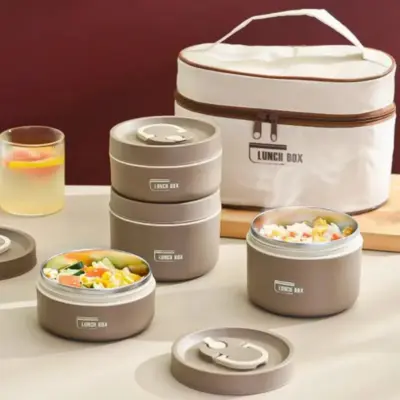
A stainless steel lunch box with several tiers carries a full meal: rice in one tier, the main dish in the next, salad in the third. The 4 tier model comes with an insulated bag for a warm meal at work or school, and the 3 tier model has a carry handle and a leak proof lid.

From Cairo Hubs4 Tier Stainless Steel Lunch Box with Insulated Bag Original price was: 683 EGP.525 EGPCurrent price is: 525 EGP.Add to cartView product
- Pack the night before and keep the box in the fridge, ready to grab.
- Put dishes with sauce in the tier with the tightest lid.
- Wash and dry each tier the same evening so it is ready for the next day.
For drinks, keep everyday mugs and glasses on one shelf near the kettle or the water, and guest glasses on a higher shelf. A large water bottle helps anyone who forgets to drink during a long day out. You will find mugs, glass cups and bottles in Mugs & Drinkware, and lunch boxes and travel organizers in Travel & Lunch Boxes.
How to choose kitchen organizers
Buy for the problem you have, not for the look in a photo. Before you order anything, measure your space and answer a few questions:
- What is the problem? Spills, forgotten food, no counter space, wilting herbs or cracked eggs. Pick the organizer that solves that one thing.
- Where will it go? Measure shelf depth, cupboard height and the counter corner. An organizer that does not fit becomes more clutter.
- Do you need to see inside? Clear containers for food you need to check. Closed ones for things that look busy.
- Is it easy to clean? Smooth surfaces and parts that come apart are faster to wash.
- Does it use height? Tiers, stacking and rotation give more storage in the same footprint, which matters most in small kitchens.
- Is it built for daily use? A kitchen organizer is opened many times a day, so lids, bases and handles must take it.
Every product in our Kitchen & Dining range is tested by the team before it is listed, and picked to solve one real everyday problem in the kitchen. Delivery reaches every governorate in Egypt.
Mistakes to avoid and daily care
Most kitchen systems fail for the same few reasons:
- Buying organizers before sorting. You end up neatly storing things you should have removed.
- Filling every surface. A full counter is a cluttered counter, even if everything sits in a container.
- Deep cupboards with no system. Use baskets or tiers so the back row is easy to reach.
- Mixing old and new stock. Always pour new food under or behind the old.
- No labels. If the family cannot tell rice from bulgur at a glance, things go back in the wrong place.
- Storing food near heat. Keep dry food and oil away from the stove and the sunny window.
Care is easy once it becomes a routine:
- Daily: clear and wipe the counter after dinner, and return every tool to its holder.
- Weekly: check the fridge before shopping, use or throw away what is old, and wipe the shelves.
- Monthly: empty one pantry container at a time, wash it, dry it fully and refill it.
- Every season: look at what you did not use and move it out of the kitchen.
Grease on pots and stainless steel builds up fast in a busy kitchen. A cleaner made for burnt grease and rust brings back the shine, and a brush that cleans both sides of knives and cutlery at once makes washing up safer for your hands. Our cleaning and laundry guide covers the full routine for the rest of the home.
More kitchen guides
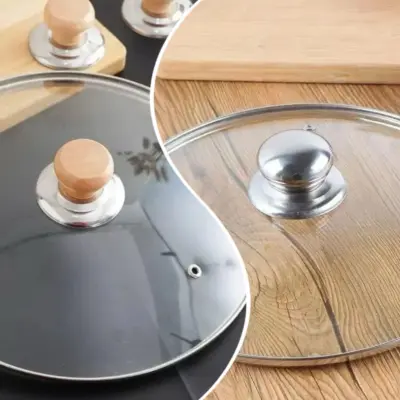 How to Fix a Broken Pot Lid Handle at HomeA broken lid knob does not mean a new pot. Fit a wooden or stainless replacement knob in…
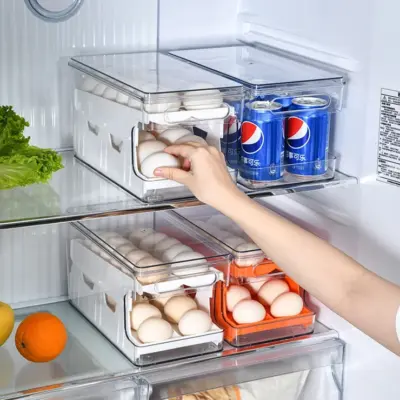 How to Organize Your Fridge in an Egyptian KitchenA simple shelf map for the Egyptian fridge, a step by step reorganize, and clear holders for eggs…
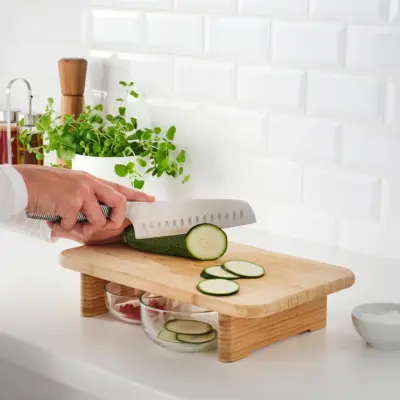 How to Stop a Cutting Board From Slipping on the CounterA wooden board on legs stays steady while you chop and doubles as a breakfast or serving tray.…
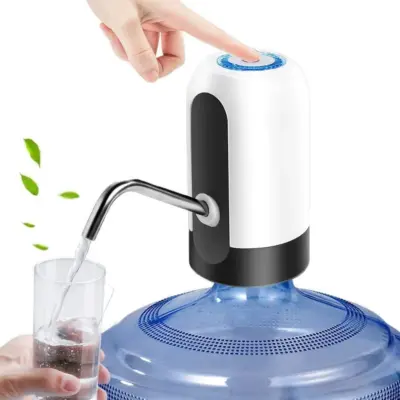 How to Use a Large Water Bottle at Home Without Lifting ItStop lifting heavy water bottles. A rechargeable pump fills your glass at the press of a button, with…
 How to Pack a Warm Lunch for Work or School in EgyptPack a warm home lunch for work or school with a 4 tier stainless steel lunch box: what…
Questions people ask
How do I organize a small kitchen with no cupboards?
Use height and corners: rotating organizers, tiered holders and containers that stack. Keep only daily items on the counter, put the rest on wall shelves or a trolley, and give every item one fixed place so it always goes back to the same spot.
What is the best way to store rice and lentils at home?
Store them in clean, dry, closed containers away from the stove and direct sun. Clear containers or a compartment organizer show how much is left. Pour new stock under the old so the older food is used first.
How do I keep parsley and coriander fresh in the fridge?
Remove damaged leaves, keep the herbs dry, and store them in a closed herb keeper on a fridge shelf instead of the plastic bag. Use the oldest bunch first.
How should I organize my fridge?
Give each shelf one job: ready food and leftovers on top, dairy and eggs in the middle, raw meat and chicken closed on the bottom shelf, vegetables and fruit in the drawers, and drinks and sauces in the door.
Where do I keep kitchen utensils if I have no drawers?
A utensil holder with separate compartments next to the stove keeps spoons, forks, knives and cooking tools upright, sorted and within reach.
Where can I buy kitchen organizers in Egypt?
Cairo Hubs sells kitchen organizers, containers and tools that the team tests before listing, with delivery to every governorate in Egypt. Delivery costs 80 EGP and is free on orders over 1,000 EGP.
 Storage & Organization
 Kitchen & Dining
 Mugs & Drinkware
 Travel & Lunch Boxes
 Ramadan
 Cleaning & Laundry
 Bathroom
 Bedroom & Living
 Decor & Lighting
 Office & Study
 Kids & Toys
 Winter Slippers
 Smart Tools
 Tools & Repairs
 Car Accessories
 Health & Beauty
 Sports & Fitness